The order of what follows matters more than the list. My final disease state is not the sum of these exposures. It is the result of one particular sequence of them, where each one changed how I responded to the one after it.
-
2017
The lab
My illness began after a chemical exposure in a research lab I was working in. I was diagnosed with chronic fatigue syndrome. For the first four years I saw no environmental link at all — the exposures that were driving me down were chronic, transient and multi-factorial, and there was no discrete trigger to point at.
A chest CT taken that year was read as normal. Looking at it again later, the retrosternal space where the thymus sits appears compressed compared with a typical scan. That is precisely the region where I had always felt the root of the illness was.
-
2017–21
Four years of the wrong question
I spent this period mapping biological pathways and testing every theory available: B12 deficiency, craniocervical instability, clotting disorders, genetic variants, mast cell activation. Each was either not present in my case or did not respond to treatment. I saw close to a hundred doctors. At the worst of it my father had to carry me into appointments because I was unresponsive.
My mistake in this period was focusing on the direct toxicity of the substance that started it. I was looking for a poison. The problem was not a poison.
-
2021
The apartment that made it visible
I moved into a new apartment and deteriorated steadily. Eventually the difference between being inside and outside became sharp enough to notice. A mold test found heavy growth outside the building, likely blowing in through the windows, and the symptoms stopped when I wore a mask indoors.
But in the bedroom I had a completely different set of symptoms, and the mask made no difference to them. I concluded the bedroom had a VOC problem from the wood varnish — molecules small enough to pass straight through the filter. Two exposures, two symptom profiles, in the same apartment.
That was the moment the illness stopped looking like one disease.
-
2021
Four days in a freshly painted room
This is the single event that changed the trajectory most. I spent four continuous days in a room finished in matte white paint. Matte white is high in titanium dioxide and has a low ratio of binder to pigment, which means the surface sheds easily.
Airing the room out for weeks did nothing. Neither did repainting, air filtration, changing the HVAC filters, cleaning with baking soda or washing the carpet. This was the only exposure I have had where the symptoms kept getting worse after I left it.
What changed afterwards: my joints began travelling past their normal end range. My skin became pale, striated, slow to heal and easy to damage. The shape of the muscles in my forearms visibly changed. The disease would advance in response to mechanical force — using a massage gun made it worse. And I acquired a new vulnerability, where fibre and polymer exposures would leave my head feeling clogged.
I could physically tell my lymphatic system was blocked, and had to manually drain my head and limbs to get any relief. Symptoms migrated around my body for the first year or two, never staying in one place. After a lymphatic massage in 2022 I had a distinct gritty taste, like a mouthful of sand.
-
2022
Everything else
I lost my girlfriend, my apartment and both my jobs in the same year. I have been denied workers' compensation for the chemical exposure that caused the illness, denied unemployment, denied disability twice, and turned down by the Undiagnosed Diseases Network twice. I have received no assistance of any kind, and have spent tens of thousands of dollars of my own money on it.
The one partially subsidised apartment complex in my state for people with disabilities has a waiting list eight years long. When I called Massachusetts to see whether moving out of state would help, I was told their voucher programme was running fourteen years.
-
2023
Looking at the tissue
I arranged a 3 mm skin punch biopsy and had it imaged with transmission electron microscopy — not the standard nerve density count, which cannot see this kind of damage. The images showed abnormal inclusions inside myelinating Schwann cells, glycogen deposits in keratinocytes, and collagen bundles that were separated and disorganised while fibril diameter and count stayed normal.
I sent the images to around a dozen nerve morphologists. Several confirmed the abnormality independently. To me, disorganised bundles with normal fibrils reads as mechanical disruption, not a collagen synthesis defect.
That same year, cold weather triggered another sharp drop in function.
-
2024–26
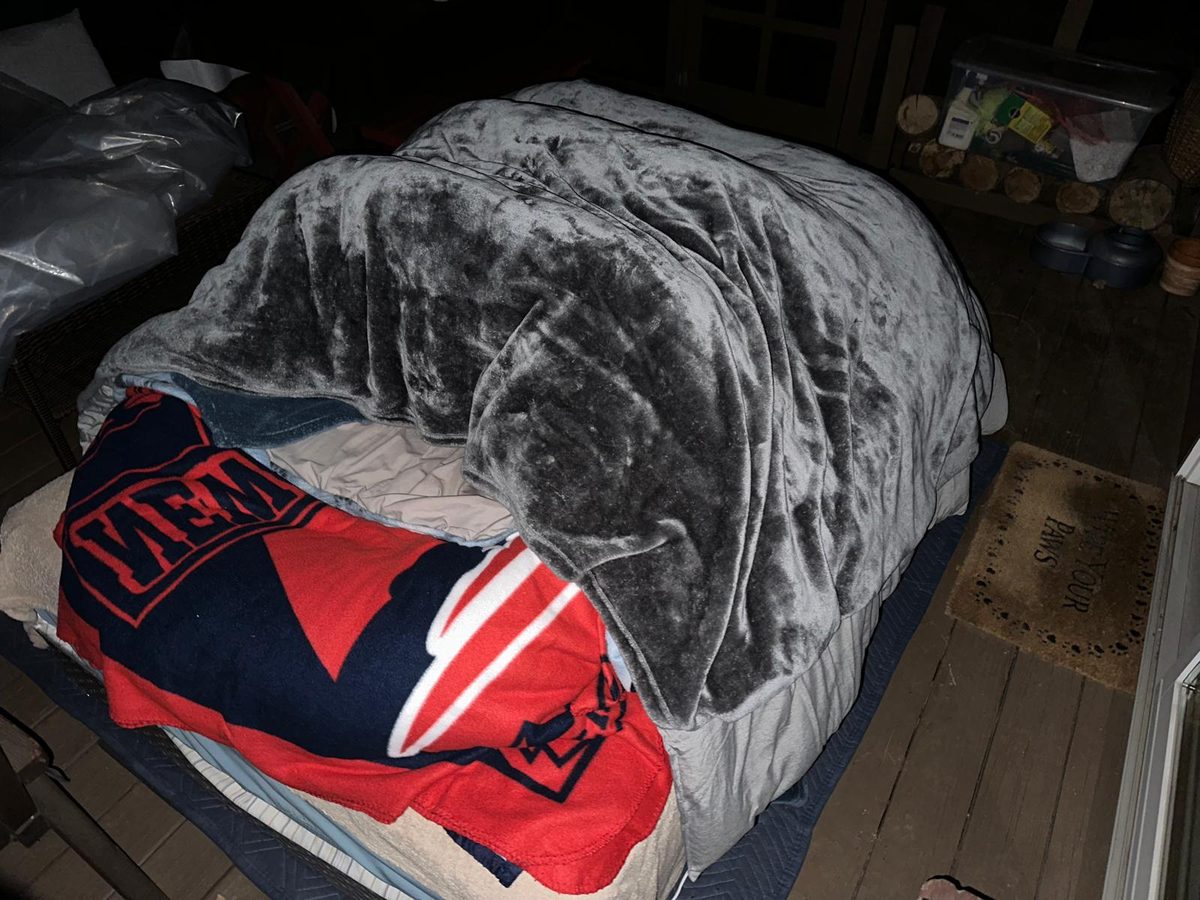
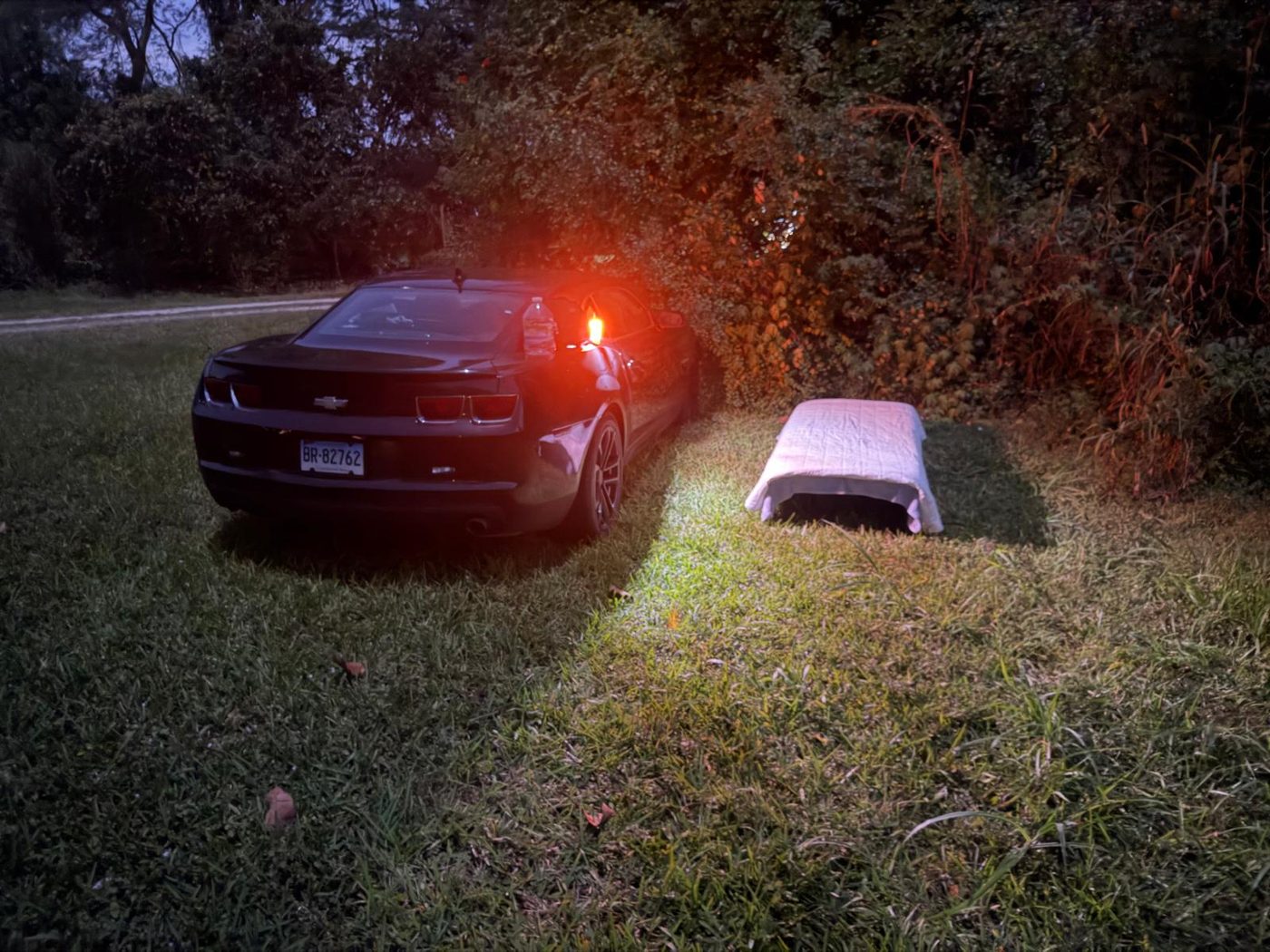
Living outdoors
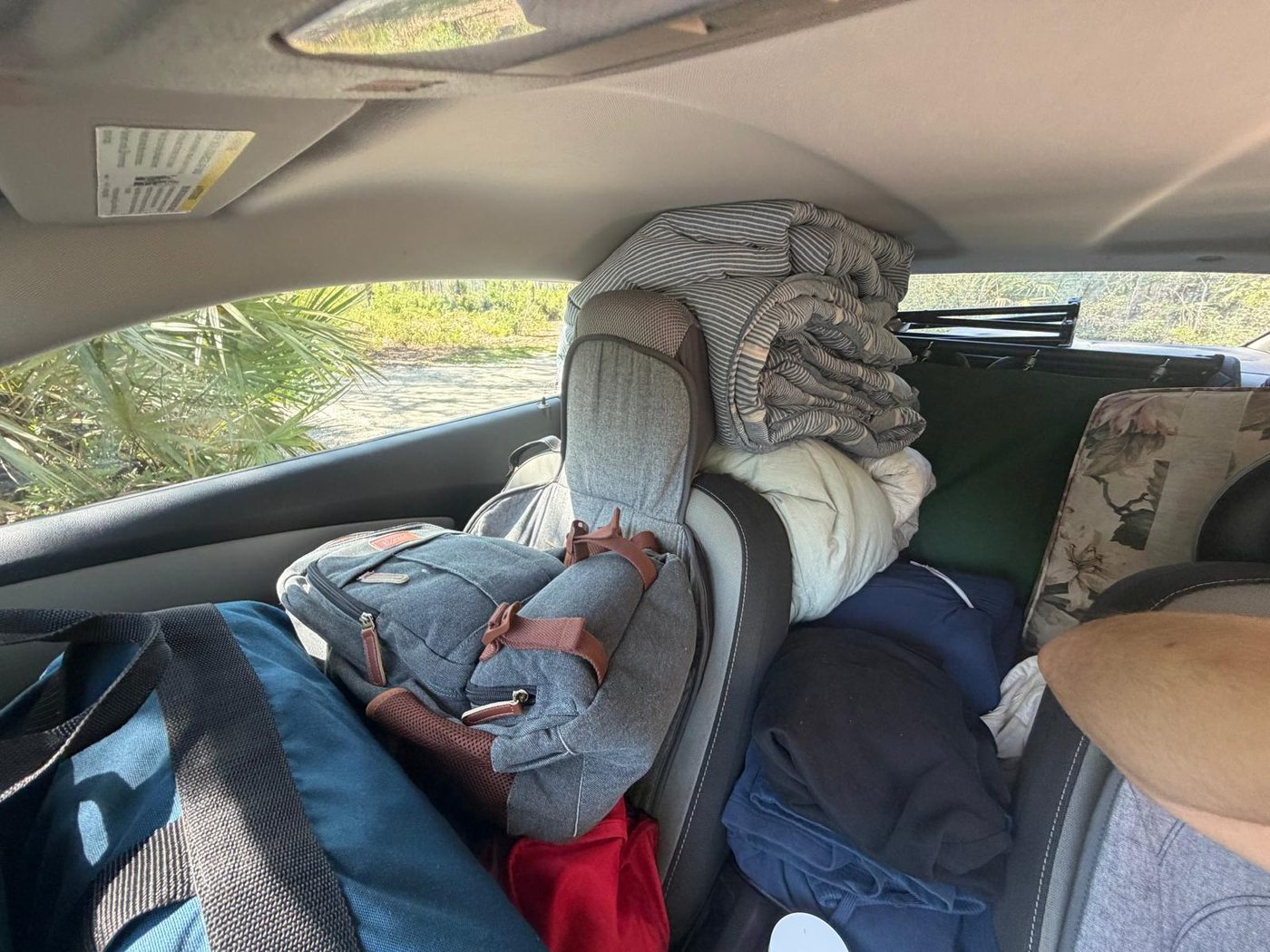
I now live outdoors full time, completely uncovered — no tent and no enclosed space. Before this I tried everything I could think of to make an indoor space survivable: motel rooms, sealing a bathroom floor behind a closed door, covering rooms in tarps, foil and shower curtains, cotton mosquito netting, a cot under a glass panel, redoing flooring, sleeping on a porch, sleeping with my head out of a window.
None of it held. So it has been Connecticut through the autumn, everything I own packed into the car, driving alone to Florida for the winter, and constant movement between campsites and state parks. Dew and frost. Bears. Mosquitoes and poison ivy. Smoke from campfires, wildfires and controlled burns.
This is not a lifestyle choice and it is not a treatment I would recommend to anyone. It is the only way I have found to reduce exposure enough to stay alive.
Step-down events
My decline has not been gradual. It happens in abrupt drops — my baseline capacity resets to a lower level and stays there. It does not come back on its own.
What triggers one: lying on or bending my spine, mental overexertion, sugar and carbohydrates, chemical exposures such as VOCs and smoke, and cold weather. What it feels like: my chest goes dead, I become short of breath, and I feel deflated. Blood flow to my brain seems to drop, which makes the suffocating feeling worse. Sometimes I feel like I am about to pass out and have to start running to stop it. Afterwards there is a permanent increase in weakness in my limbs.
Since the start of 2026 these events have come with tinnitus, followed by hearing loss at specific frequencies.
One thing I did not expect: my fingernails record them. A new change appeared with each major step-down and each change adds to the last — Terry's nails and mild clubbing at the start of the illness in 2017, ridging and opacity after the paint exposure in 2021, and cuticle loss when the cold hit in 2023.
Two models for post-exertional malaise
PEM is usually framed as a response to exertion. In my own case, two different explanations fit the observations better.
The first is mechanical stress. My pain and weakness track straining, flexing and pressure rather than muscle use. Petechiae-like dots appear on my arm after I have slept on it — load with no exertion at all. Exertion without strain provokes much less.
The second is respiratory toxin load. Exertion raises your respiratory rate, and a higher respiratory rate means more air, which means more airborne contaminant absorbed per minute. When I am indoors I have to hold my breathing at an almost nonexistent level to tolerate the air. Between 2019 and 2021 I made real functional gains doing nothing but abdominal breathing around the clock, avoiding chest movement entirely.
On reading this as a patient. The exposures that drove my illness were specific to my history and my biology, in a particular order. I would not assume the same sequence applies to anyone else, and I would be careful about drastic changes to your living situation on the strength of one person's account. The mechanism is the part I think generalises.