
I am a former molecular biologist and patient advocate who has put together an environmental model for Complex Chronic Illnesses, including ME/CFS, Long COVID and multiple chemical sensitivity.
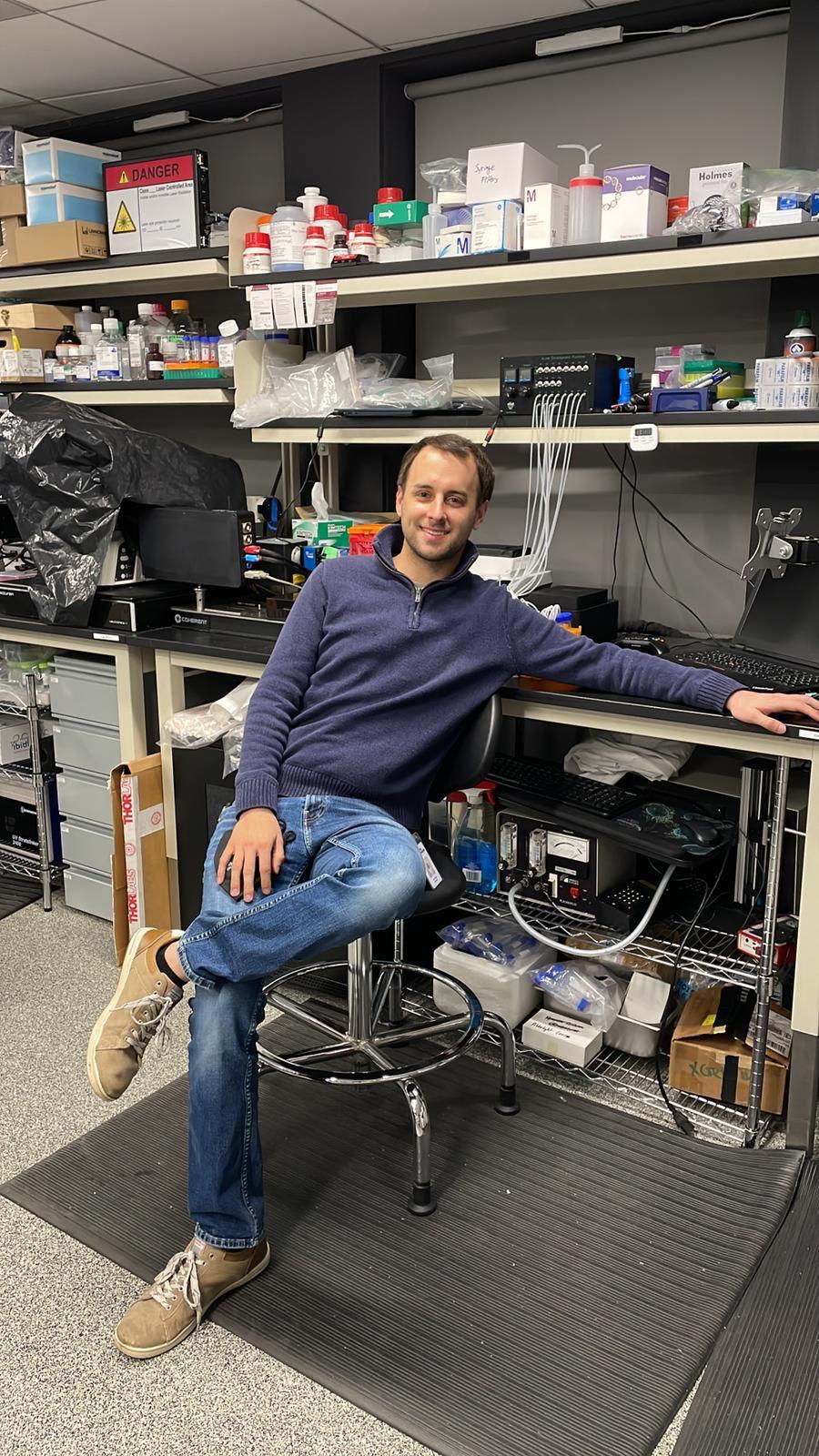
Research background:
- Research assistant in an oligosynthesis production lab
- Completed one year of a PhD program in biology
- Ran a research department at a genomics company in Cambridge
- Consulted for a biotech company doing POTS and ME/CFS research
In 2017, I suffered an occupational hydrazine exposure, which led to the illness described on My Story.
Since then, I've spent nine years on what amounts to a second research program on myself: running tests, reading literature, designing my own imaging work, surveying the patient community, and eliminating theories one at a time until I finally figured out how my illness worked. The work on this site was done from a series of temporary living situations and, for the past year, while living outdoors full time.
On the advocacy side: I've done four Solve M.E. Advocacy Weeks, including an in-person visit to Capitol Hill to lobby for the CARE for Long COVID Act. I attended advocacy group meetings for years, and collected patient testimonies and sent them to the Open Medicine Foundation, the Bateman Horne Center, PolyBio, #MEAction and Solve M.E. I personally phoned and met with multiple congressional offices and researchers, attended conferences, and contacted media outlets. I started my own advocacy group to lobby for legislative action to secure safe housing for people with environmental illness. I created a series of YouTube videos to raise public awareness of the mechanism of environmental illness that I discovered. And I served as a consumer reviewer for the Department of Defense's toxic exposure research program. The fuller account is on Advocacy.
- I am not selling anything.
- I don't offer any consulting service.
- I don't have a magical protocol for you to follow.
- There is no paid tier program.
- I have no affiliations, institutional or otherwise.
I am just someone who became very ill and found answers that I would like to see used to stop the suffering that millions of people are going through.
Publications
- Fujiwara K, Harada M, Sato H, et al. Mechanisms of multiple chemical sensitivity triggered by fragrance pollution. Toxicology and Environmental Health Sciences. 2026;18:283–292. DOI: 10.1007/s13530-026-00303-0. My contribution was writing — review & editing.
- Goldberg SB, Narayan A, Kole AJ, et al. Early Assessment of Lung Cancer Immunotherapy Response via Circulating Tumor DNA. Clinical Cancer Research. 2018;24(8):1872–1880. PMC: PMC5899677. I am named in the acknowledgments for assistance with oligonucleotide synthesis; not a co-author.
Source material
This site is a rewrite of work that previously existed as presentations, papers and talks. The originals are:
- Observations of an Environmentally Driven Disease — presented to Patients to Researchers, August 2026.
- Environmental Drivers of Disease in ME/CFS & Long COVID — presentation covering the titanium dioxide literature and tissue comparisons, presented during a private USAWG meeting.
- Advocacy remarks delivered at SOLVE M.E. Advocacy Week and related events.
Video versions of most of this material are on my YouTube channel, Scott the Scientist — see the videos page. I'm also on X at @scott_scientist.
Press & elsewhere
- Scott Daniska Story — Open Medicine Foundation, October 2024.
- Mold exposure can trigger and worsen chronic illness. Climate change will increase the risk. — The Sick Times, 21 May 2026.
- Episode 46: Finding Environmentally Safe Housing with Scott Daniska — The Chemical Sensitivity Podcast.
- Chronic Disease 101: What You Need to Know with Scott the Scientist — Take care of Your Body by Ry.
Contact
I am most interested in hearing from researchers and clinicians who could test any part of this — particularly anyone with access to compositional analysis of tissue samples, electron microscopy, or a patient cohort willing to be asked systematic questions about their environment.
I also read messages from patients, though I should be honest that my capacity to reply is limited and varies enormously week to week. Please do not take a slow response personally.
Use the form below.
Thanks — your message was sent. I read everything myself, but my capacity to reply is limited and varies week to week, so please don't take a slow response personally.
If you want to help
- Test something. The most valuable thing anyone could do is take one falsifiable piece of this and check it — compositional analysis on the particles in the biopsy sample would be the highest-value single experiment.
- Ask your patients about their environment. If you are a clinician, systematically asking about building materials, recent painting or renovation, and whether symptoms change between locations costs nothing and would either build or destroy the case for this model quickly.
- Share it. The main obstacle for nine years has been that nobody with the means to evaluate this has read it.
- Support funded environmental research directly. NIH recently awarded Nova Southeastern University's Institute for Neuro-Immune Medicine a $3 million grant to study whether mold and mycotoxin exposure affects symptom severity and immune function in ME/CFS — led by Lubov Nathanson, PhD, with Dr. Nancy Klimas as a co-investigator (NSU announcement). If you'd like to direct a donation toward that kind of work specifically, NSU's advancement office can set up a restricted gift — donorrelations@nova.edu.
Citing this work
Daniska S. The Environmental Drivers of Complex Chronic Illness. Self-published, 2026. Available at: https://environmentalillness.pages.dev
Standing of this work. This is independent, patient-led research. The mechanism described on this site has not been peer-reviewed, replicated, or tested in any controlled setting, and it comes from a single subject. I am a co-author on one peer-reviewed paper (see Publications, above), but that paper is a separate piece of work on fragrance-triggered multiple chemical sensitivity, and its peer review does not extend to the model, synthesis or claims made on this site. The published studies referenced elsewhere on this site are real and independent of me; the synthesis, the interpretation and the application to ME/CFS are mine alone and remain unproven.
Nothing here is medical advice, a diagnosis, or a treatment recommendation. If you are unwell, work with a clinician who knows your case.