A Broken System
The cost of being sick with a disease the system does not recognize is beyond what anyone can fathom. It's not just being denied benefits, being denied housing assistance, having no research funding, and having no platform to speak on. If you're sick for long enough, you will find that every friend you had slowly fades away, your family stops understanding your condition, your relationships dissolve and you can't connect with anyone anymore, you don't have the energy to take part in even the smallest recreational activities, even if it's just playing video games or watching TV, you lose all the money you saved from working hard your whole life, you can't hold a thought for two seconds, you dissociate from reality completely, every second you wonder if it will be your last, and every day is worse than the day before it.
After years of research-level medical testing, I've accumulated multiple large binders of medical tests, because nobody has any answers about what this illness is. I've been to hundreds of doctor's appointments. I've tried several hundred different supplements and medications. I've poured thousands of hours into my own research.
It is one thing to have no answers. It is another to be told the symptoms are psychosomatic and that what you are experiencing is not real, while being ushered out of one office after another. At my worst, my father had to carry me into appointments because I was unresponsive.
One doctor told me outright: "Your quality of life is fine and you should just learn to live with it." Even the diagnosis itself took over a year and a half of waiting for an appointment — I had orthostatic tachycardia from the start, but it wasn't formally diagnosed until I flew out for a visit at Vanderbilt. For a long time I didn't want to accept even Chronic Fatigue Syndrome as the label, because what I felt was a lot closer to dying than to fatigue.
I have been denied workers' compensation for the chemical exposure that caused this. Denied unemployment. Denied disability more times than I can remember. Rejected by the Undiagnosed Diseases Network twice. I have lost tens of thousands of dollars and a career I was near the top of, not to mention the insurmountable financial loss of the income I would have earned on the very bright career path I was on.
On housing: the single partially subsidized complex in my state for people with disabilities has an eight-year waiting list. Massachusetts told me their voucher program is running fourteen years. I have spent the last year living outdoors full time because there is no housing resource available to someone in my position — not because outdoor living is a treatment, but because indoor air is what is killing me and nothing else was available. I cover what I've learned about finding safer housing on the Treatment page.
The advocacy record
I have spoken at four SOLVE Advocacy Weeks now, and nothing has changed. The number of people affected has grown enormously since the pandemic, and patients appear to be suffering as much and feeling as hopeless as ever.
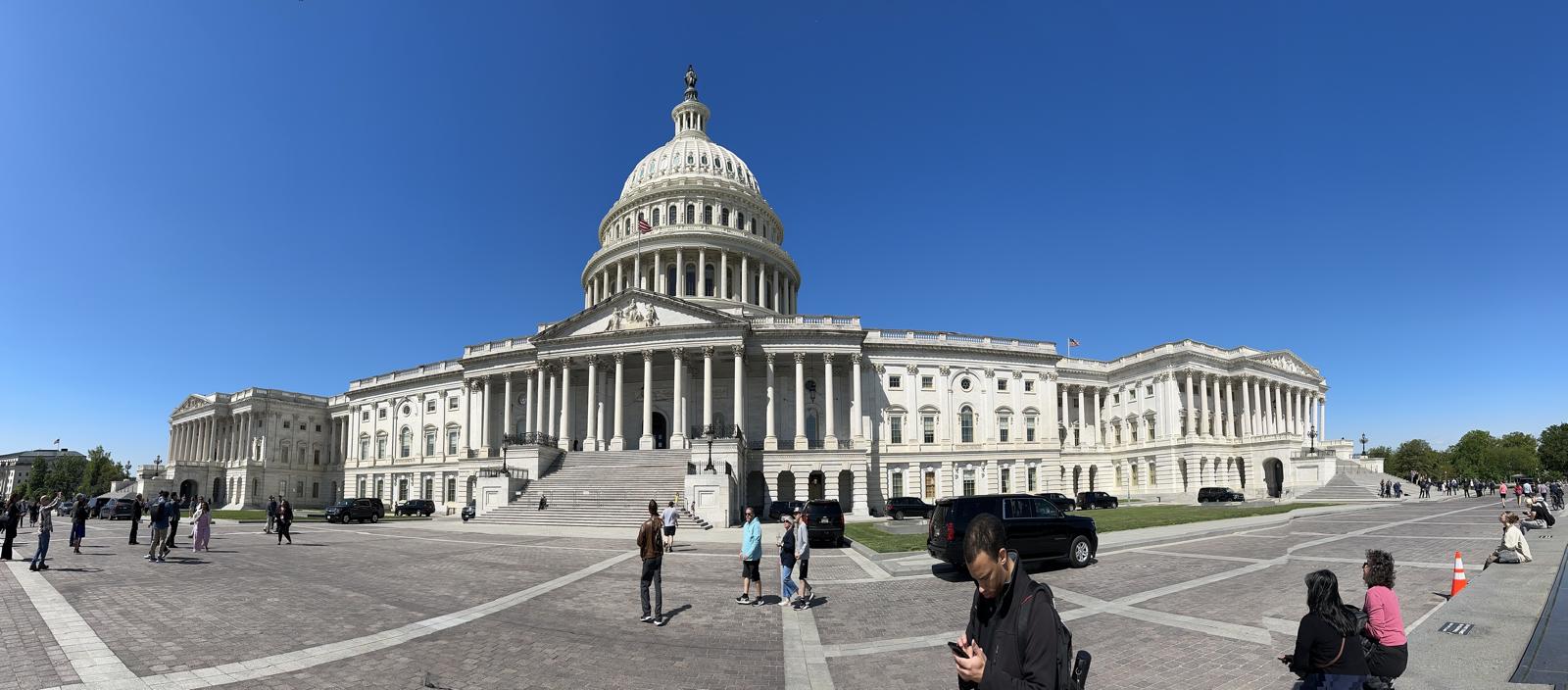
In one of those years, dozens of ME/CFS patients traveled to Washington D.C. for advocacy week — which, if you know anything about this disease, is an enormous physical ask. Not one senator met with any of them. The Care for Long COVID Act, which was close to the most modest bill anyone could propose, never passed — it has been too long now, and the bill is effectively dead.
If you are struggling right now, please reach out to someone. In the US you can call or text 988 for the Suicide & Crisis Lifeline, any time. Being disbelieved by doctors does not mean you will be disbelieved by everyone.
People are dying of this illness, and of what the illness does to a life when no support exists around it. Suicide risk in ME/CFS is substantially elevated compared with the general population (source: Mortality in Patients with Myalgic Encephalomyelitis and Chronic Fatigue Syndrome, AMMES, 2017), and it is not because the people affected are weak. It is because they are in severe, unrelenting pain, are frequently disbelieved, and can see no path to help. I have lost friends. I am not going to describe the details of those deaths here, because that does not serve anyone reading this who is struggling — but the pattern needs to be named, because it is a policy failure and it is being treated as background noise.
I have a research background and have spent nine years doing my own investigation into this disease, because nobody else was going to. Now that I have findings I think matter, I cannot find anywhere to present them.
I have contacted congressional offices, TED, dozens of reporters, dozens of podcasts, several major ME/CFS advocacy organizations, individual researchers and medical conferences. Almost none of them gave me sixty seconds. When you have ME/CFS you are genuinely invisible — and that invisibility extends to your work, not just your body.
I have also been collecting patient testimony directly — I'm now on a third round of gathering accounts from people with ME/CFS and Long COVID describing how dramatically their environment affects them, and sending it to the Open Medicine Foundation, the Bateman Horne Center, PolyBio, #MEAction and Solve M.E. How many more of these does it take before an environmental cause gets looked at seriously? I genuinely don't know.
This website is my answer to that. If nobody will offer a platform, the material can at least be public and readable.
Where advocacy falls short
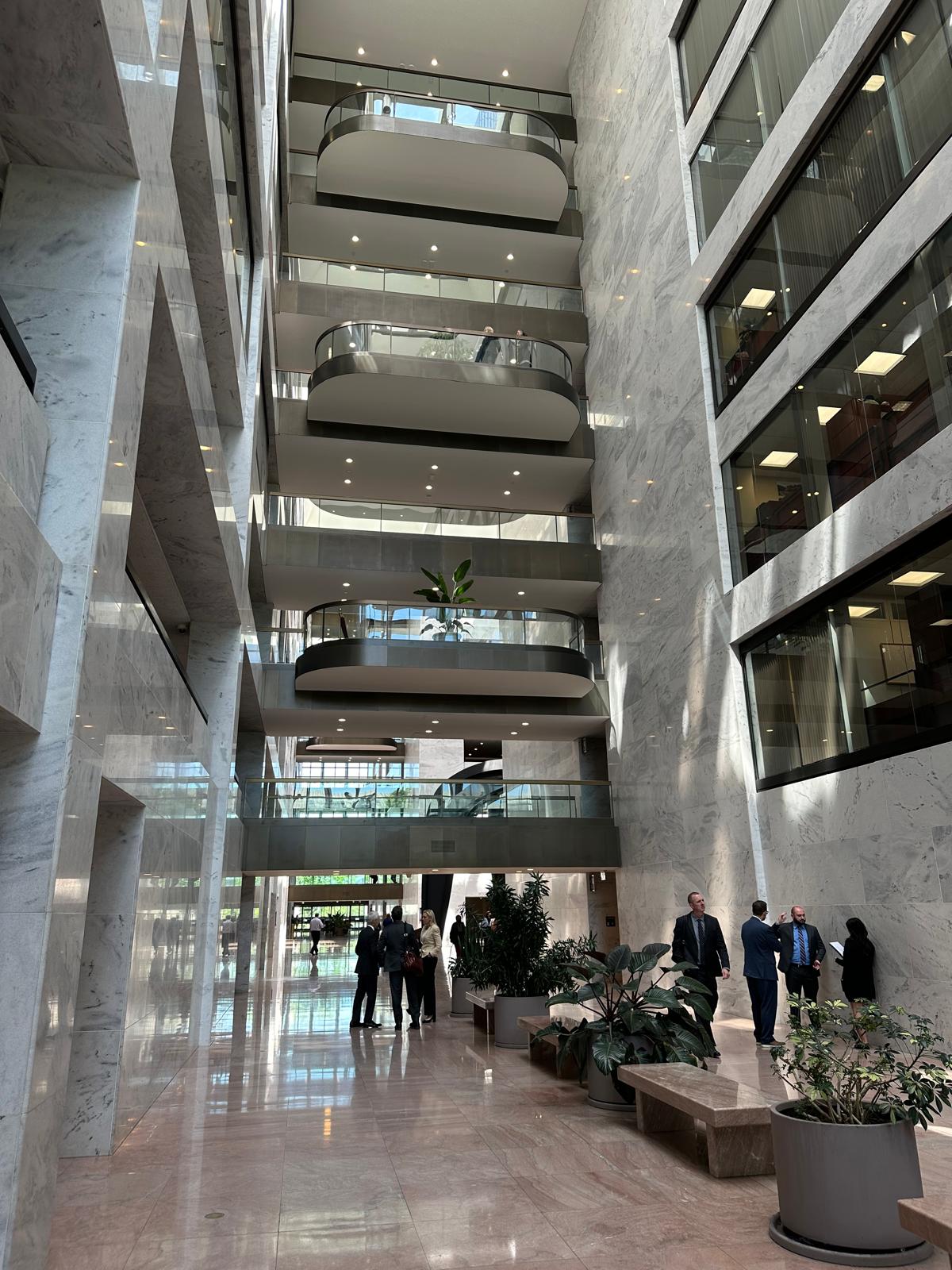
I've spent years inside chronic-illness advocacy: attending every meeting of one group for five straight years, petitioning on Capitol Hill, and serving as a consumer reviewer on Department of Defense research grant panels. I'm writing this because effective advocacy matters enormously to people who are too sick to advocate for themselves, and because in its current form it often isn't working. These are patterns, not accusations against any one person or group, and I've left names out on purpose.
A framing that leaves people out
Much of the field now describes ME/CFS and related conditions as 'infection-associated chronic illnesses'. But a substantial share of patients, 36% in one United States cohort, where 64% reported an infection-related episode around onset, report no infectious onset at all. The label pushes those people to the margins, and it hides one of the most important clues we have: if the illness can begin without an infection, infection isn't what's required to start it. Something else is, and the environmental exposures described on this site are a strong candidate.
Partisanship
As individuals, we all have the right to our political views. But advocacy organizations speak for patients of every race, gender, income and political persuasion, and when they post partisan commentary through the organization, they misrepresent the people they claim to represent. Members have told me privately that they feel unable to speak up because their views differ from leadership's, and that they fear being pushed out if they do.
It is also self-defeating. Federal bills for these illnesses have drawn little or no Republican support, and in a divided government that means they don't pass. There is common ground available that advocacy groups largely ignore: veterans with Gulf War illness, people who report illness after vaccination, and environmental health, which appeals across party lines. When I urged that a recent federal bill lead with its environmental component to broaden its support, that advice wasn't taken, and the bill drew no Republican votes.
Representation concentrated at the top
Groups speak of community and togetherness, yet in practice a small number of people at the top set the agenda and the membership is asked to push it. The same handful of speakers appear at every public event and webinar. In the group whose meetings I attended for five years, I saw members raise good points meeting after meeting without leadership acting on any of them.
Gatekeeping by credentials and affiliation
There is far too much dismissal of anyone without an MD or an institutional title. Some of the most useful observations I've seen came from patient researchers: people with serious scientific ability who study their own illness closely. Yet I have been told, more than once, that I couldn't present because I wasn't affiliated with an organization. Lived experience, documented carefully, is primary data. It should be judged on its evidence, not on the letters after someone's name.
Ideas that never reach the community
Advocacy groups are well placed to surface and share good ideas from patients, and they rarely do. Podcasts and webinars are often limited to board members and those campaigning with them. Information members want to share with the wider community frequently isn't passed on.
How members are treated
I've been scheduled to speak at events and then canceled at the last minute so someone more prominent could take the slot. When I tried to report bullying and harassment to leadership, I was ignored and then removed. When I asked a coalition's leadership to commit to non-partisanship and offered to discuss it on a call, they declined and removed me from the group. Organizations that serve vulnerable people need to be the safest places to raise a concern, not the most dangerous.
What would work better
- A non-partisan charter: organizations speak on illness, research and access, not party politics, and say so in writing.
- Broader coalitions: build with environmental-health groups, veterans' organizations and chemically sensitive communities, whose causes overlap with ours and whose support crosses party lines.
- Equal voice for members: open, rotating speaker slots; an open call for podcast and webinar guests; regular member surveys whose results are published and acted on.
- Patients with real weight: the Department of Defense's consumer reviewer model, where patients sit on grant panels with voting weight, works well, especially when reviewers are given scientific training. Advocacy governance could use the same idea.
- Evidence over titles: judge contributions by the quality of the evidence, whether they come from a physician, a scientist or a patient.
- Accountability: published minutes, a clear complaints process, and independent review of reports of harassment, so raising a concern never costs someone their membership.
None of this is an argument against advocacy. It's an argument for advocacy that represents the whole community, listens to it, and is built to win support rather than lose it. The people living with these illnesses deserve nothing less.
NIH Says It's Open to Input; Its Actions Say Otherwise
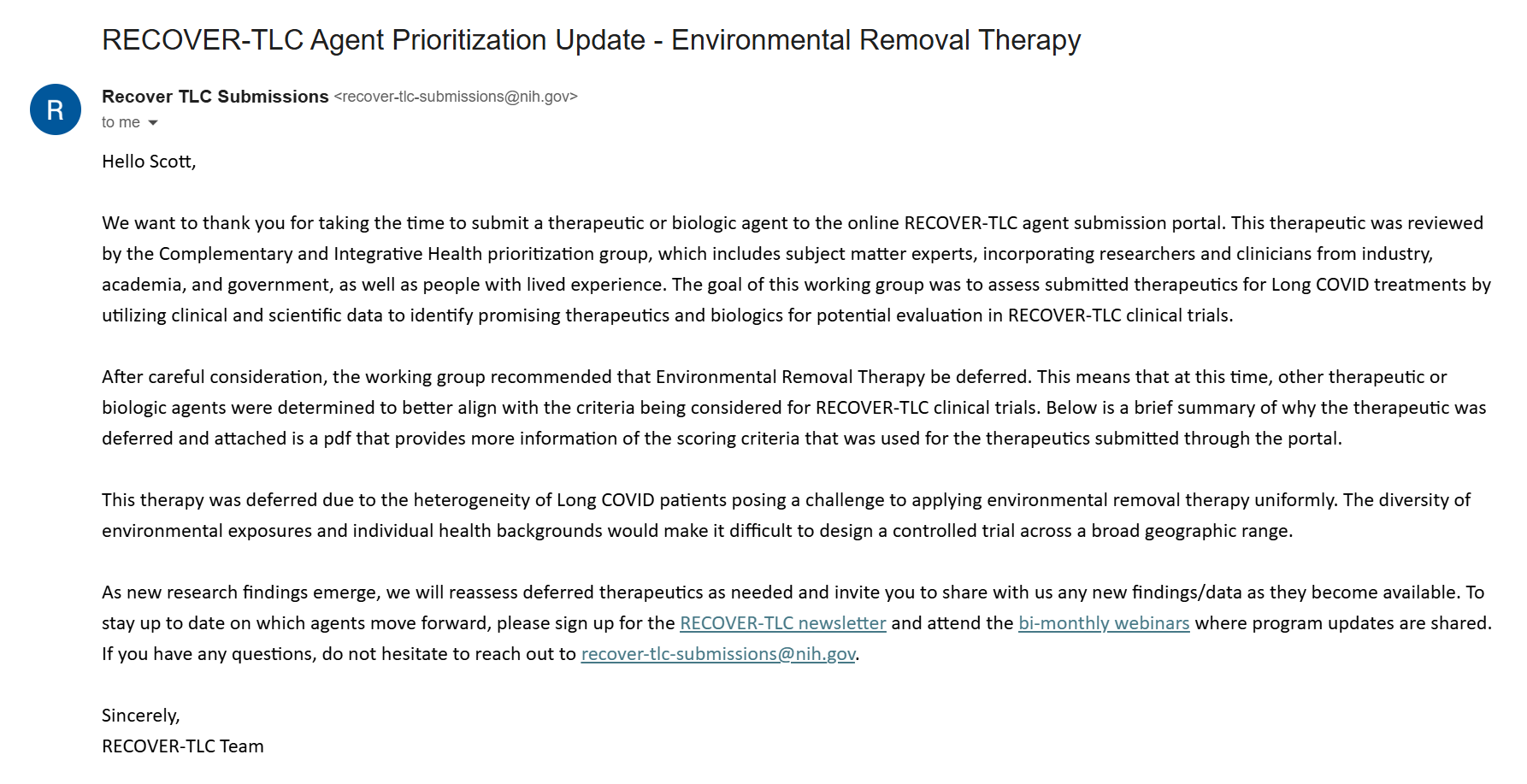
The NIH's RECOVER-TLC program invites the public to submit potential treatments through an online portal, and says its review groups include people with lived experience. In 2025 I submitted environmental removal therapy: identifying and removing the exposures driving a patient's illness. I didn't just share my own experience; I shared testimonies from dozens of patients, some of whom entered remission through avoidance alone. I took the extensive research and lived experience I had, along with the observations I gathered from speaking with thousands of members of the community over many years, and interpreted those findings through the lens of my strong biology background. I gave them the testimonies and studies they needed to have a high degree of confidence that this would work and be meaningful. I was hopeful that, after many years of shutting their ears to the patient community, they were finally ready through this program to hear the valuable input they needed from patients. Unfortunately, they decided to defer my feedback (A1). The reason given was that the heterogeneity of Long COVID patients, and the diversity of their environmental exposures, would make it difficult to design a controlled trial across a broad geographic range.
That heterogeneity is the point. If what drives the illness differs from one patient to the next, a trial that gives everyone the same drug will keep coming up empty. I did everything I could to help them break out of the pharmaceutical-focused loop they have been stuck in, which has burned through billions of dollars without yielding a single diagnostic test or treatment for the Long COVID community. On paper, they claim the door is open to community input. In my experience, it has stayed closed no matter how much evidence, testimony and answers are put in front of them, and the program keeps running the same kind of single-drug trials that continue to fail and waste taxpayer dollars year after year.
Progress so far
I want to be accountable to a timeline here, not just describe intentions.
- In 2022, Solve M.E. began categorizing illnesses like mine as "infection-associated," which I think unnecessarily narrows the research scope. After more than two years of speaking out about it, I'd estimate more than 70% of organizations in this space now use the broader term "complex chronic illness" instead.
- Dr. Lubov Nathanson was awarded a $3 million grant to research mycotoxins in ME/CFS — one of the first signs that environmental research direction is actually shifting.
- Renegade Research hosted the first patient-to-researcher lived-experience roundtable, giving patients a direct channel to correct theoretical errors in how researchers were framing the disease, something I had been individually messaging researchers about for years.
What's next
- More patient-to-researcher sessions like Renegade Research's, if they keep hosting them, and finding another venue if not.
- Advocating to Congress for more complex-illness research funding, now that the research direction has actually improved and that funding would be spent more effectively.
- Helping Amatica get their diagnostic and therapeutic identification tool clinically approved and distributed, wherever the roadblocks turn out to be.
- Working with both grant reviewers and the researchers applying for grants to get more histological studies and environmental research funded — I won't consider that done until environmental research is at least 40% of the field.
- Pushing for real regulation of the domestic building materials, home products and indoor air quality I think are driving a lot of this.
What I am asking for
- Fund environmental research in ME/CFS and Long COVID. There is almost no awareness in the research community of the environmental contribution to chronic illness, and to my knowledge nobody is investigating insoluble nanoparticle exposure in this context at all.
- Collect what patients already know. Surveys of treatment response can be run in weeks for almost nothing and would tell clinicians which commonly prescribed drugs this population reports being harmed by. That data is currently going uncollected.
- Give doctors something to work with. An established set of tests, treatments and lifestyle guidance would end an enormous amount of duplicated, exhausting effort by people who have very little energy to spare.
- Fix the housing gap. An eight-year waiting list is not a program. For people whose illness is driven or worsened by their built environment, housing is medical treatment. I think the place to start is building zero-VOC homes — homes that are not just shelter, but a medical device.
- Rebalance research funding toward the environment. I think more than 50% of medical research should be environmental science. That is where the answers are, and where the gains in quality of life and health span, not just lifespan, are going to come from.
- Stop asking us to be inspiring. We do not need to hear how strong we are. What exactly is the alternative?
What day one should look like
This is what should happen the moment someone is diagnosed, if the healthcare system were actually built for this disease:
- Reflex testing for comorbidities — POTS, MCAS, craniocervical instability and the rest, checked automatically rather than chased down one referral at a time.
- A treatment options chart, built from what patients already report, worked through with the patient rather than handed to them on the way out the door.
- Microdosing as the default for any new pharmaceutical or supplement being trialed.
- The doctor talks to family and coworkers, not just the patient, about what accommodation and care actually look like.
- A holistic plan covering diet, light sensitivity, sauna/red-light/HBOT, identifying and eliminating environmental triggers, and non-restrictive clothing.
- A path to remote or accessible work for patients who are mild or improving.
- An information binder — the most relevant research from the last five years, plus other patients' stories, remission and non-remission both.
- A concierge to help with medical appointments, disability applications, legal help and housing.
None of this is exotic. There is no reason every new patient should have to go through hell figuring out what their illness is from square one, every time.
Research projects I would advocate for
These are the studies I want funded.
- Measuring air quality in homes and workplaces of people who developed ME vs those who didn't — ideally even have people wear a high quality monitor and track air quality measurements of healthy people who get sick and contract chronic illness in real time.
- Respiratory tract biopsies to do histological analysis to verify barrier damage and tissue depletion.
- Brain autopsies to quantify plastic/polymer buildup.
- Lymph node aspirations and mass spec to look for exogenous factors like titanium dioxide.
- Take people with progressive ME and move them into homes of people who had ME but made a recovery, to see if those people start to also recover.
- Potentially create a mouse model for ME by injecting them with common airborne contaminants (mold, VOCs, particulates, microplastics).
A bill for safe housing
Draft model legislation developed in 2023 by an advocacy group I founded and led, the MCS Housing Initiative. It has not been introduced in Congress; 'H.R. XXXX' is a placeholder. Organizations and legislators are welcome to adapt it.
In the spring of 2023 I started a small advocacy group of people living with environmental illness and multiple chemical sensitivity, with one goal: legislation that would make safe, accessible housing possible for people like us. Over that year the group drafted, debated and refined the bill below, and built a presentation to explain environmental illness and the case for the legislation to people who had never heard of it.
For people with environmental illness, housing isn't the backdrop to treatment; it is the treatment. Every meaningful improvement in my own record came from changing the air around me, and every setback from an exposure in it, including exposures from outside my own walls: a neighbor's paint, lawn fertilizer, a landscaper's spray. No medication substitutes for air a person can tolerate, and the current housing system has no way to provide it.
What existing law already does
In 1992 HUD's General Counsel concluded that multiple chemical sensitivity and environmental illness can qualify as handicaps under the Fair Housing Act. That gives people the right to request reasonable accommodations, such as fragrance-free maintenance, notice before pesticide use, or a different unit. But accommodations are negotiated case by case, after someone is already housed, and they cannot create safe housing that doesn't exist. The bill is aimed at that gap: supply, access and standards.
What the bill does
- Recognition and accessNames environmental illness and MCS as disabilities across federal programs and gives priority access to HUD housing vouchers.
- Trial periodsLets a person live in a vacant unit for at least two weeks to test their tolerance, paying only prorated rent if they leave.
- Home loansCreates government-guaranteed loans with minimal down payment and longer terms, so people can build or retrofit homes they can tolerate.
- An office for environmental sensitivitiesA dedicated office within HUD, advised by people with lived experience, to fund, research, set standards and take complaints.
- Dedicated communitiesSupports housing communities in low-pollution locations, built from tested materials, with shared rules on what's used indoors and out.
- A safe-housing templateAn evidence-based national standard for materials, ventilation and construction, to be assessed for use in all new American housing.
Why each piece matters
Trial periods. Tolerance can't be judged at a viewing. Reactions can be delayed by hours or days, so the only way to know whether a home is safe is to live in it. Today, finding out that a unit isn't tolerable usually means breaking a lease and paying for it. A two-week trial turns that gamble into an assessment.
Home loans. Many people with environmental illness can't find any rental they tolerate, so building or retrofitting their own home is the only option. Years of illness usually leave little in savings. A guaranteed loan with minimal down payment and a longer term makes that option real.
Dedicated communities. A safe home can be undone by what the neighbors do. Paint, pesticides, fertilizer, dryer sheets and woodsmoke all cross property lines. A community built in a clean location, from tested materials, with shared rules, protects everyone in it in a way no single house can.
A safe-housing template. There is no national standard for low-emission, low-particulate housing. A published template would let builders get it right the first time, and because what protects the most sensitive people tends to benefit everyone, the bill asks for it to be considered for all new housing.
An office for environmental sensitivities. These needs fall between agencies. One office, advised by people who live with the condition, gives them a place to be heard, researched and enforced.
How this connects to the model
If environmental exposures drive this illness, as the rest of this site argues, then avoidance is the first treatment, and avoidance at home is impossible without housing designed for it.
What you can do
- Share the bill.
- Send it to your representative and senators.
- Tell me what should change.
Read the full bill
Summary of H.R. XXXX - Environmental Housing Act of 2023
This legislation aims to address the housing needs of individuals with Environmental Illness/Multiple Chemical Sensitivity (EI/MCS) by creating innovative and urgent housing solutions. The key points of this legislation include:
1. Disability Access and Federal Funding: The legislation recognizes EI/MCS as a disability. It mandates the inclusion of EI/MCS in federal disability access and anti-discrimination programs. HUD is directed to ensure individuals with EI/MCS have equal access to HUD vouchers and special accommodations.
2. Trial Period Housing: Individuals with EI/MCS are eligible for a trial period in specific housing units to assess their tolerance to air quality. The trial period must be a minimum of two weeks, allowing individuals to terminate the housing agreement without penalties beyond prorated rent.
3. Special Home Loan Programs: The federal government will establish separate home loan programs tailored for individuals with environmental sensitivities. These programs will provide funding without significant self-payments, offer longer repayment terms.
4. Subcommittee and Office of Environmental Sensitivities: A subcommittee will be established to advocate for the needs of individuals with environmental sensitivities. The Office of Environmental Sensitivities will oversee funding, research, and coordination efforts to improve housing accessibility. It will develop guidelines, standards, and a safe housing template, collaborate with stakeholders, and report progress to Congress.
5. Segregated Housing Communities: The federal government will support the creation of safe and segregated housing communities specifically designed for individuals with EI/MCS. These communities will prioritize safe living locations, materials, and strict living rules and requirements, managed by experts in environmental sensitivities.
6. Safe Housing Template: The federal government, in collaboration with experts and the Office of Environmental Sensitivities, will develop a standardized safe housing template based on scientific evidence. The template will be disseminated, accompanied by guidance, and regularly updated.
H.R. XXXX
To fund and authorize the Secretary of Housing and Urban Development to award grants for creating innovative and urgent housing solutions for Environmental Illness.
IN THE HOUSE OF REPRESENTATIVES
July 10, 2023
A BILL
To fund and authorize the Secretary of Housing and Urban Development to award grants for creating innovative and urgent housing solutions for Environmental Illness.
Be it enacted by the Senate and House of Representa-tives of the United States of America in Congress assembled,
SECTION 1. SHORT TITLE.
This Act may be cited as the “Environmental Housing Act of 2023’’ or the ‘‘Safe Housing Act of 2023’’.
SEC. 2. DEFINITIONS.
In this Act:
(1) ENVIRONMENTAL ILLNESS (EI).—A chronic, multisystemic condition characterized by an individual's heightened sensitivity to environmental factors. Environmental illness has been diagnosed using various names, including but not limited to: chemical sensitivities, chemically harmed, chemical allergies, chemical autoimmune illness, and toxicant‐induced loss of tolerance (TILT), sick building syndrome (SBS), and idiopathic environmental intolerance (IEI).
(2) MULTIPLE CHEMICAL SENSITIVITY (MCS).—A specific type of environmental illness wherein individuals experience significant adverse, and occasionally fatal, health effects from exposure to common or household chemicals.
(3) SAFE HOUSING.—Housing that has been constructed or retrofitted to minimize the exposure of occupants to chemicals, toxins, and electromagnetic radiation. Because of the substantial medical need for a safe and accommodating environment, safe housing shall be considered a medical device for individuals with EI/MCS.
SEC. 3. DISABILITY ACCESS AND FEDERAL FUNDING.
(a) ENVIRONMENTAL ILLNESS AS A RECOGNIZED DISABILITY.—Environmental illness (EI), Multiple Chemical Sensitivity (MCS), and related terms shall be recognized as a disability under the Americans with Disabilities Act (ADA), The Civil Rights Act of 1964, and other relevant legislation.
(b) INCLUSION IN FEDERAL PROGRAMS.—EI/MCS shall be explicitly included in all federal disability access and anti-discrimination programs.
(c) ENHANCED ACCESS TO HUD VOUCHERS.—The Department of Housing and Urban Development (HUD) shall ensure that individuals with EI/MCS have access to HUD vouchers for both low income and safe housing with accommodations, and without discrimination or exclusion. Because housing is a medical device for those with EI/MCS, this urgent medical need shall be reflected in their priority for housing vouchers, and special accommodations shall be provided under their healthcare policies.
SEC. 4. TRIAL PERIOD HOUSING TO IMPROVE ACCESSIBILITY.
a) IN GENERAL.—Individuals with EI/MCS shall be eligible for a trial period to assess their tolerance to air quality in specific housing units. Housing providers shall not discriminate against individuals based on their medical condition if accompanied by valid medical documentation. This trial period is an obligation to housing providers only in instances of vacancy of the unit.
b) TRIAL PERIOD DURATION AND FEES.—Individuals with EI/MCS shall be provided a trial period of a minimum of two weeks in duration, to stay at a prospective housing unit, unbound by penalties or fees from breaking lease term duration, other than a rent payment prorated from the year lease time rate. In instances of the full purchase of housing unit, the fee for a 2 week stay shall not exceed 1% of the asking price of the home.
c) LANDLORD OBLIGATIONS.—Landlords and housing providers shall comply with requests for trial period housing made by individuals with EI/MCS, provided they submit valid medical documentation. Landlords shall not discriminate against individuals with EI/MCS during the selection process or during the trial period based on their medical condition. Housing providers shall ensure that the designated housing units meet air quality standards conducive to the needs of individuals with EI/MCS.
d) TENANT RIGHTS AND RESPONSIBILITIES.—Individuals with EI/MCS participating in the trial period shall have the right to reside in the designated housing unit without being bound by the penalties of the lease agreement for breaking the lease duration. During the trial period, individuals shall be responsible for their own living expenses, including rent, utilities, and any damages caused to the housing unit. Individuals shall adhere to the rules and regulations set forth by the housing provider or landlord.
e) EVALUATION AND LEASE AGREEMENT.—At the conclusion of the trial period, individuals determine whether they can tolerate the air quality. The tenant is responsible for notifying the housing provider of termination of housing agreement within the 2-week trial period, vacate the housing unit, and seek alternative housing options. If the housing provider is not notified, the terms of the full lease duration will take effect.
f) COMPLIANCE AND ENFORCEMENT.—The [relevant government agency or department] shall oversee the compliance of housing providers with the provisions outlined in this legislation. Complaints regarding discrimination or failure to comply with trial period housing requests shall be investigated, and appropriate actions shall be taken to ensure compliance with the law.
SEC. 5. SPECIAL HOME LOAN PROGRAMS.
(a) IN GENERAL.—The federal government shall establish separate home loan programs tailored for people with environmental sensitivities to build their own housing to meet their personal safe housing needs. These programs shall ensure that those with EI/MCS have access to suitable housing option, while attempting to minimize their financial burden. To achieve this, the special home loan programs will offer the following provisions:
i) Loans without self-payments: The loan programs will provide funding without requiring individuals with environmental sensitivities to make significant self-payments beyond the vouchers provided.
ii) Longer repayment terms: Recognizing the unique challenges that those with EI/MCS face as they struggle to recover and lead a normal life, the loan programs will offer longer repayment terms to allow borrowers to manage their loan payments more effectively.
(b) COLLABORATION WITH FINANCIAL INSTITUTIONS.—The federal government shall collaborate with financial institutions to facilitate the implementation of these specialized home loan programs. The federal government will act as a guarantor for individuals with EI/MCS to help them secure more flexible/favorable loans.
SEC. 6. SUBCOMMITTEE AND OFFICE OF ENVIRONMENTAL SENSITIVITIES.
(a) ESTABLISHMENT OF SUBCOMMITTEE AND OFFICE.—A subcommittee, called the Subcommittee on Environmental Sensitivities, shall be created to advocate for the needs and concerns of individuals with environmental sensitivities, including EI/MCS.
(b) SUBCOMMITTEE COMPOSITION.—The Subcommittee shall consist of experts, advocates, and individuals diagnosed with EI/MCS, ensuring representation from diverse perspectives.
(c) DUTIES AND RESPONSIBILITIES.—The Subcommittee shall be responsible for developing policies, guidelines, and recommendations to regularly advise HUD’s directors to improve housing accessibility and promote the rights and needs of individuals with EI/MCS. The Office shall oversee the funding, design, and implementation of safe housing for individuals with EI/MCS within HUD.
(d) RESEARCH AND COORDINATION.—The Office shall conduct research, coordinate initiatives, and collaborate with relevant federal agencies, research institutions, and stakeholders to reduce chemical exposures, promote the use of safer building materials, and understanding of environmental sensitivities to housing providers.
(e) GUIDELINES AND STANDARDS.—The Subcommittee shall develop comprehensive guidelines and standards for construction, retrofitting, and management of safe housing for individuals with environmental sensitivities. These guidelines shall be based on scientific evidence and regularly updated to reflect advancements in the field.
(f) COLLABORATION AND PARTNERSHIPS.—The Office shall collaborate with EI/MCS advocacy organizations, housing providers, and other relevant stakeholders to foster partnerships, gain feedback and modify effective strategies, policies, and guidelines to and enhance housing accessibility and accommodations for those with EI/MCS.
(g) REPORTING AND EVALUATION.—The Office shall provide regular reports to Congress on the progress of their initiatives, including updates on research findings, policy developments, and the impact of their efforts on improving housing accessibility and the well-being of individuals with EI/MCS.
(h) FUNDING AND SUPPORT.—The federal government shall allocate necessary resources to the Office to ensure effective implementation of their duties and responsibilities, including the provision of necessary staff, research funding, and support for collaborations with external entities.
(i) PUBLIC OUTREACH AND EDUCATION.—The Office shall engage in public outreach and educational initiatives to increase awareness and understanding of environmental sensitivities, promoting inclusivity and fostering a supportive environment for individuals with EI/MCS.
(j) TIMELINES AND DEADLINES.—The Office shall establish timelines and deadlines for the completion of their tasks and deliverables, ensuring efficient progress in addressing the critical needs of individuals with EI/MCS and advancing safe housing accessibility.
(k) REPORTABILITY AND ENFORCING.—The Office shall establish a dedicated hotline or contact number to address EI/MCS-related complaints and concerns regarding infringement of building rules and lease terms by landlords or other tenants, allowing individuals to seek assistance and guidance in resolving such issues.
SEC. 7. SEGREGATED HOUSING COMMUNITIES.
(a) NEED FOR SEGREGATED HOUSING.—Recognizing the unique needs and challenges faced by individuals with EI/MCS, the federal government shall support the creation of safe and segregated housing communities specifically designed and managed for individuals with environmental sensitivities.
(b) SAFE HOUSING REQUIREMENTS.—These EI/MCS safe communities will be constructed in safe living locations (away from heavy traffic, manufacturing plants, cell towers, airports, military sites, etc.), using safe building materials, and run with strict safe living rules and requirements all tenants must abide by. The Office of Environmental Sensitivities shall consult with the subcommittee on what constitutes safe locations, building materials, and living requirements.
(c) UTILIZATION OF EXISTING PROGRAMS.—The federal government may allocate resources from existing subsidized housing programs, such as 811/202 housing, to support the development of these segregated communities.
(d) CREATION OF NEW PROGRAMS.—The federal government will create a new program, specifically to fund the creation of living communities for people with EI/MCS, in order to supplement the necessary housing funding from existing programs.
(e) MANAGEMENT.—The management of these housing communities shall include individuals with expertise and experience in environmental sensitivities to ensure appropriate accommodation and support services.
SEC. 8. TEMPLATE FOR SAFE HOUSING.
(a) DEVELOPMENT OF SAFE HOUSING TEMPLATE.—The federal government, in collaboration with experts in environmental sensitivities and the Office of Environmental Sensitivities, shall create a standardized template for safe housing design, construction, and materials that mitigate exposure to environmental triggers. The template shall be based on the best available scientific evidence and shall prioritize the health and well-being of individuals with environmental sensitivities, including EI/MCS.
i) In addition to the design of a template for safe housing for those with EI/MCS, the federal government and the Office of Environmental Sensitivities shall assess these safe housing materials and designs for feasibility, cost, and reproducibility to incorporate into all American housing construction going forward. The purpose of this is to create safer and more ecological living spaces for all Americans to maximize their health and well-being.
(b) DISSEMINATION AND GUIDANCE.—The Office of Environmental Sensitivities, in coordination with relevant agencies and stakeholders, shall be responsible for disseminating the safe housing template to home builders, architects, and individuals seeking to create their own safe housing. Accompanying the template, comprehensive guidance on best practices, accessibility requirements, and recommended materials shall be provided to ensure the effective implementation of the safe housing standards.
(c) COLLABORATION WITH STAKEHOLDERS.—The federal government, through the Office of Environmental Sensitivities, shall actively collaborate with the subcommittee, home builders, architects, and EI/MCS advocacy organizations to ensure that the safe housing template reflects diverse perspectives and incorporates innovative approaches to meet the unique needs of individuals with environmental sensitivities.
(d) EVALUATION AND IMPROVEMENTS.—The Office of Environmental Sensitivities shall establish a monitoring and evaluation framework to assess the effectiveness and impact of the safe housing template and identify areas for improvement. The Office shall regularly update the safe housing template based on advancements in scientific research, technological innovations, and feedback from individuals with environmental sensitivities. These updates shall be made publicly available to ensure that the template remains up-to-date and aligned with the latest knowledge and practices.
(h) REPORTING TO CONGRESS.—The Office of Environmental Sensitivities shall provide regular reports to Congress on the progress, challenges, and outcomes of the safe housing template implementation. These reports shall include updates on the dissemination efforts, adoption rates, training programs, and the overall impact on enhancing housing accessibility and promoting the health and well-being of individuals with environmental sensitivities.
SEC. 9. FUNDING AND IMPLEMENTATION.
(a) AUTHORIZATION OF APPROPRIATIONS.—Subject to the availability of funds, necessary appropriations shall be authorized to implement the provisions outlined in this legislation.
(b) TIMELY IMPLEMENTATION.—HUD and other relevant federal agencies shall promptly develop and implement regulations, guidelines, and programs required to fulfill the objectives of this legislation.
SEC. 10. SEVERABILITY.
If any provision of this act, or its application to any person or circumstances, is held invalid, the remainder of the act or the application of the provisions to other persons or circumstances shall not be affected.
SEC. 11. EFFECTIVE DATE.
This legislation shall take effect ninety (90) days after its enactment.
Download (Word) Download (PDF)
References
These are the published studies the model draws on. They are real and independent of me; the synthesis and the application to ME/CFS are my own.
- Chu L, Valencia IJ, Garvert DW, Montoya JG. Onset patterns and course of myalgic encephalomyelitis/chronic fatigue syndrome. Front Pediatr. 2019;7:12. ↩
- U.S. Department of Housing and Urban Development, Office of General Counsel. Multiple Chemical Sensitivity Disorder and Environmental Illness as Handicaps. Legal Opinion GME-0009. 5 March 1992. ↩